Varicose Vein Treatment in Atlanta and Marietta: Your Options and What to Expect
If bulging, ropey veins are affecting your legs — and your confidence — you have more options today than the surgery of decades past. Modern varicose vein treatment is largely minimally invasive, often done in-office, with most people back to normal activities quickly. For patients in Atlanta and Marietta, that care is available close to home. Here’s a clear look at your options and what the process actually involves.
First, what are varicose veins?
Varicose veins are the enlarged, twisted veins — often on the legs — that appear when the tiny one-way valves inside your veins weaken. Normally those valves keep blood flowing up toward your heart. When they fail, blood pools and the veins swell and become visible.
They’re not always just cosmetic. Varicose veins are frequently a sign of underlying chronic venous insufficiency, and they can bring aching, heaviness, swelling, itching, and restless legs. That’s why an evaluation matters — treating the underlying vein problem often addresses both the appearance and the symptoms.
Your minimally invasive treatment options
Most varicose vein treatment today avoids the large incisions of traditional vein stripping. Common options include:
Vein ablation. This closes off a diseased vein using heat (radiofrequency or laser energy), rerouting blood to healthier veins. It’s one of the most common treatments for larger varicose veins and is typically done in-office. Learn more on our vein ablation page.
Endovenous laser treatment (EVLT). A laser-based form of ablation that uses laser energy delivered through a thin fiber to seal the problem vein. Our endovenous laser treatment page has details on how it works.
Sclerotherapy. A solution is injected into smaller varicose or spider veins, causing them to close and fade over time. It’s often used for smaller veins or alongside other treatments. Learn more on our sclerotherapy page. For a detailed look at how sclerotherapy and vein ablation compare, see our sclerotherapy vs. vein ablation guide.
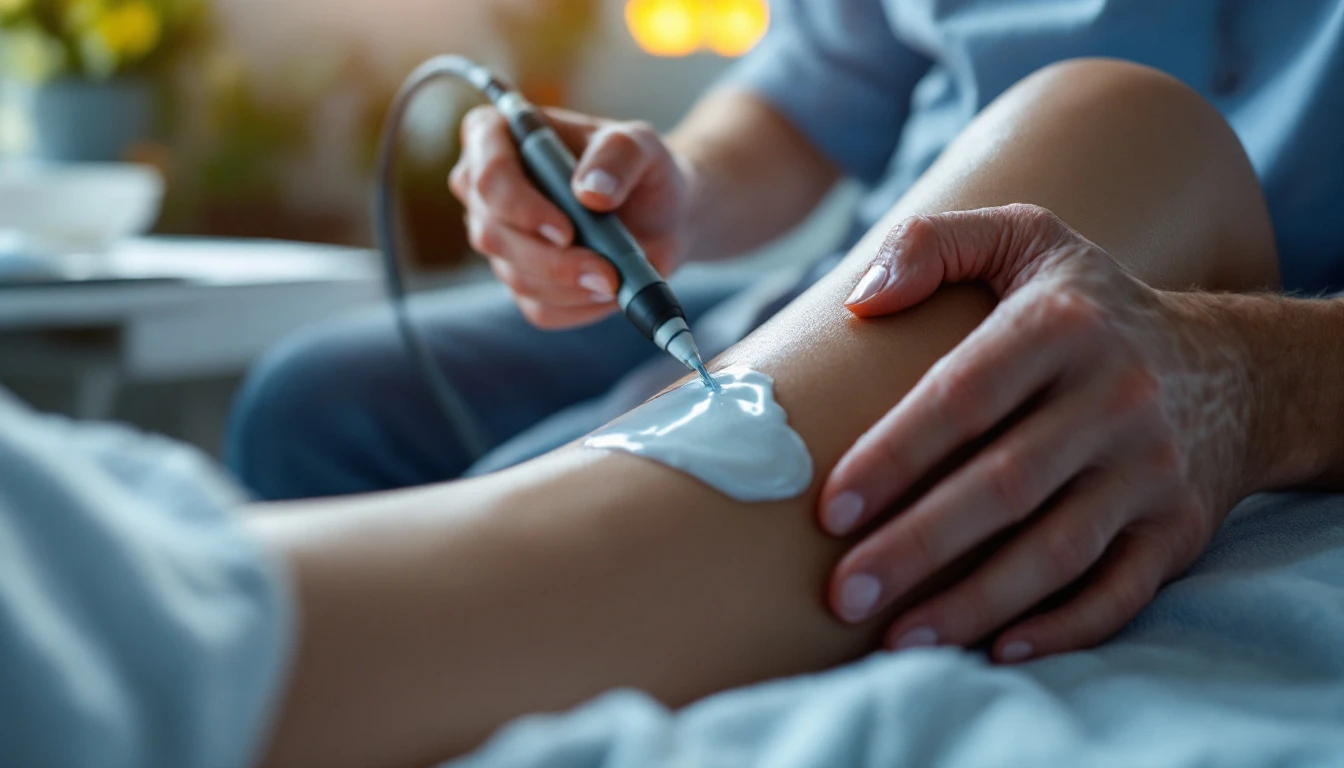
Vein mapping. Before treatment, an ultrasound is often used to map your veins and identify exactly which ones are the source of the problem. This ultrasound vein mapping step helps tailor the plan to your anatomy.
Which option — or combination — is right for you depends on the size and location of the veins and the underlying cause. That’s determined during your evaluation.
What to expect
The process usually starts with a consultation and a vein-mapping ultrasound to pinpoint the source of the problem. Treatment itself is generally quick and performed in-office, often using local anesthesia. Because these procedures are minimally invasive, most people walk out the same day and return to normal activities relatively soon, following their physician’s guidance.
Some mild bruising or tenderness afterward is common and temporary. Compression stockings are often recommended for a period to support healing. Your care team will give you specific instructions for your treatment.
Results and recovery vary from person to person, and your physician will explain what’s realistic for your situation.
Getting varicose vein care in Atlanta and Marietta
Preferred Vascular Group makes it easy to be evaluated near home. Our Northwest Atlanta location in Marietta serves Cobb County communities including Kennesaw, Smyrna, Acworth, and East and West Cobb, while our Northeast Atlanta (Dunwoody) office serves the north metro. We also have Georgia offices in Lithonia and Macon, plus a Southwest Atlanta location serving communities including College Park, East Point, and Union City.
If you’ve been searching for a vein specialist near you, an in-person evaluation is the best next step to understand what’s driving your symptoms and which treatment fits.
Schedule Varicose Vein Care in Atlanta and Marietta
If varicose veins are causing discomfort or you simply want to understand your options, the board-certified team at Preferred Vascular Group can evaluate your veins and recommend a treatment plan tailored to you — with convenient locations across metro Atlanta.
Call 404-554-2196 (Marietta) or 404-554-2080 (Northeast Atlanta), find the number for your nearest office on our locations page, or request an appointment online to schedule a consultation.
References
- Gloviczki P, et al. The 2023 Society for Vascular Surgery, American Venous Forum, and American Vein & Lymphatic Society Clinical Practice Guidelines for the Management of Varicose Veins of the Lower Extremities, Part II. Journal of Vascular Surgery: Venous and Lymphatic Disorders, 2024.
- Varicose Veins — American Society for Dermatologic Surgery.
- Varicose Veins — StatPearls, National Library of Medicine.
Disclaimer: This information is for educational purposes only and should not be used as a substitute for professional medical advice, diagnosis, or treatment. Always consult with a qualified healthcare provider about any questions you may have regarding a medical condition.
Frequently Asked Questions
Is varicose vein treatment covered by insurance?
Are varicose vein treatments painful?
How long is recovery after vein treatment?
What's the difference between sclerotherapy and vein ablation?
Do varicose veins come back after treatment?
Are varicose veins only a cosmetic problem?
Medically Reviewed By: Eric McLoney, MD, FSIR, RPVI
Medical Disclaimer: This content is for informational purposes only and does not constitute medical advice. Always consult a qualified healthcare provider for diagnosis and treatment options specific to your condition.