
Shoulder Embolization (Shoulder TAME Procedure)
Shoulder Embolization is a minimally invasive option for chronic shoulder pain — relief without surgery
Quick Answer
What is Shoulder TAME?
The Shoulder TAME procedure (Transcatheter Arterial Micro-Embolization), also called shoulder embolization, is a minimally invasive, outpatient procedure for chronic shoulder pain — including frozen shoulder (adhesive capsulitis) and rotator cuff–related pain. An interventional radiologist guides a thin catheter to the small arteries around the shoulder and reduces blood flow to the abnormal vessels that drive inflammation, which reduces pain and improves movement without surgery. It is indicated for pain that hasn't improved with physical therapy, medication, or injections, and most patients go home the same day.
What Is Shoulder Embolization (Shoulder TAME Procedure)?
TAME stands for Transcatheter Arterial Micro-Embolization. It is also known clinically as shoulder embolization or transcatheter arterial embolization (TAE).
Embolization itself is a well-established interventional radiology technique that physicians have used for decades in other parts of the body — including genicular artery embolization (GAE) for the knee and uterine fibroid embolization. Shoulder TAME is a newer, emerging application of that same proven technique, focused on the small arteries around the shoulder. TAME is proving remarkably effective for treating frozen shoulders and rotator cuff pain, among other conditions.
It is performed on an outpatient basis, so you return home the same day with no hospital stay.
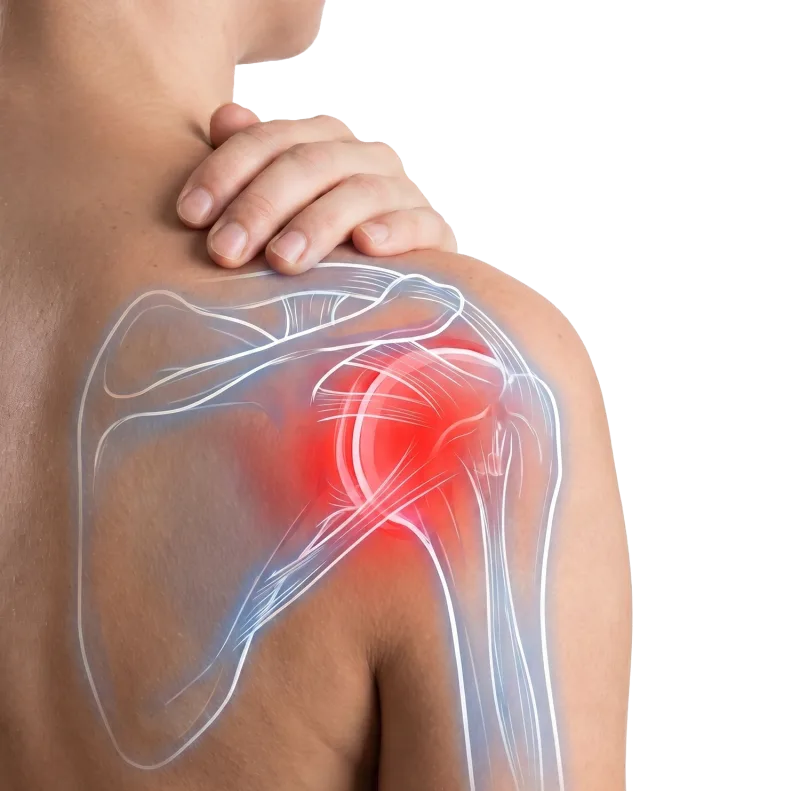
Why a Chronic Shoulder Hurts — the Mechanism of Pain Generation
When a shoulder stays irritated / inflamed for a long time, it can develop abnormal, “overactive” blood vessels — a process called neovascularization.
These abnormal vessels, and the tiny nerves that grow alongside them, contribute to ongoing inflammation and pain — including the night-time pain that frozen shoulder and rotator cuff conditions are known for.
The mechanism of Shoulder TAME is to gently reduce blood flow to these abnormal vessels, which may calm inflammation and the pain signals that travel with them.
Shoulder Conditions That Benefit
Frozen Shoulder Treatment (Adhesive Capsulitis)
Frozen shoulder causes pain and progressive stiffness that can make everyday movement difficult, often with significant night-time pain. It is the most-studied condition for the use of shoulder embolization in the published research to date.
Rotator Cuff–Related Shoulder Pain Treatment
Chronic pain from rotator cuff tendinopathy or partial tears that persists despite conservative care has also been studied as a target for shoulder embolization, particularly when surgery is not preferred or appropriate.

Who Is a Candidate for the Shoulder TAME Procedure?
Shoulder embolization is studied specifically for people whose pain persists despite conservative care. You may be a candidate if you:
- Have persistent shoulder pain or stiffness, often including night-time pain
- Have tried physical therapy, anti-inflammatory medication, or steroid injections without lasting relief
- Want to avoid or delay surgery, or are not an ideal surgical candidate
A consultation and imaging review (such as X-ray, ultrasound, or MRI) will help determine whether Shoulder TAME may be appropriate for your specific condition. You can request an appointment at Preferred Vascular Group's Akron office by following this link.
What to Expect: How the Shoulder Embolization Procedure Works
Shoulder TAME is a quick, outpatient procedure performed by our board-certified interventional radiologists.
Before
You'll have a consultation to review your symptoms, prior treatments, and imaging (X-ray, ultrasound, or MRI) to confirm whether you're a candidate.
During
Performed under local anesthesia (and light sedation if needed). A thin catheter is guided through the wrist or groin to the shoulder's small arteries, where tiny particles are delivered. Most patients feel minimal discomfort. The procedure typically takes about 1–2 hours.
After
Most patients return home the same day. Mild soreness is common for a short period, and most people resume normal daily activities within a few days, with a follow-up plan and physical therapy recommendations when appropriate.
What the Research Shows
Shoulder embolization is an emerging application of a proven technique, and it is supported by a large body of published clinical research:
- A prospective study of 40 patients with frozen shoulder reported substantial drops in pain and improved range of motion over six months (Fernández Martínez, 2021).
- A multicenter trial of 100 patients reported significant, sustained improvement in refractory nighttime shoulder pain, with no major adverse events (Okuno, 2022).
- A 2026 systematic review (meta-analysis) pooling 12 studies (329 shoulders) found shoulder embolization was associated with large improvements in pain, shoulder mobility, and function, with a favorable safety profile.
Taken together, the research shows that shoulder embolization is an excellent minimally invasive treatment option for appropriately selected patients with persistent shoulder pain who have not improved adequately with conservative therapy. During your consultation, we'll review what the data tell us, so you can make an informed decision. Sources are listed in the References section below.
Safety and Side Effects of the TAME Procedure
The safety profile of shoulder embolization has been very favorable, with no major or severe complications reported. The side effects that have been described are generally mild and temporary, such as:
- Soreness or bruising at the catheter access site (wrist or groin)
- A brief, low-grade fever the night of the procedure
- Temporary skin discoloration near the shoulder
- Temporary itching around the shoulder
Your physician will review the specific risks and benefits with you before scheduling.
How Shoulder TAME Compares to Other Chronic Shoulder Pain Treatments
| Approach | Invasiveness | Typical Recovery | Often Considered When |
|---|---|---|---|
| Conservative care (PT, NSAIDs, steroid injection) | Non-invasive to minimally invasive | Varies; ongoing | First-line approach |
| Shoulder embolization (Shoulder TAME) | Minimally invasive (outpatient) | Often a few days | Pain persists despite conservative care; prefer to avoid/delay surgery |
| Manipulation under anesthesia / capsular release | Procedure / surgical | Weeks | Persistent stiffness (frozen shoulder) |
| Arthroscopy / rotator cuff repair | Surgery | Weeks to months | Structural damage requiring repair |
| Shoulder replacement | Major surgery | Several months | Severe, end-stage joint disease |
Why Choose Preferred Vascular Group?
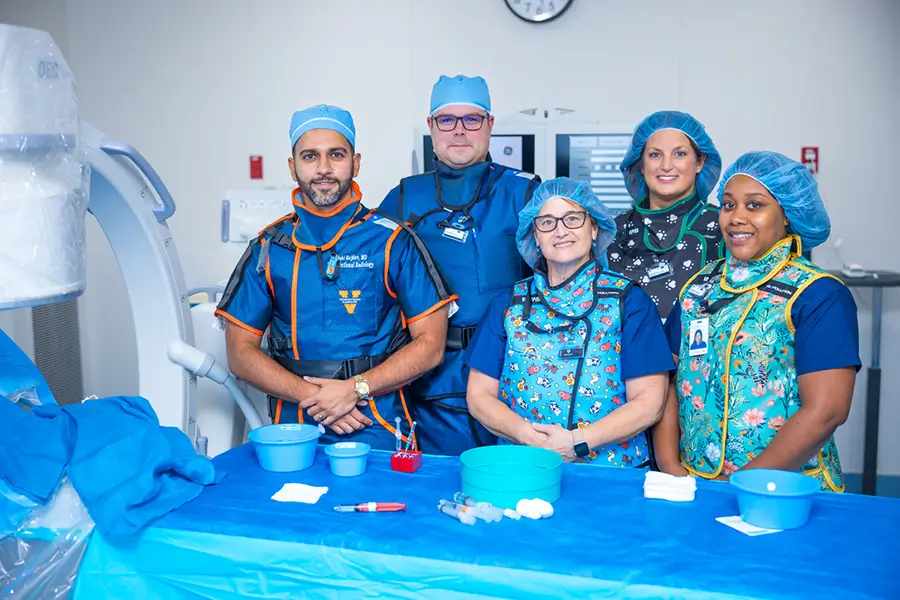
Shoulder embolization at Preferred Vascular Group is led by Dr. Maharshi Rajdev, a board-certified vascular and interventional radiologist and Northeast Ohio's highest-volume physician for musculoskeletal embolization procedures.
- Expert Care: Performed by experienced, board-certified interventional radiologists.
- Minimally Invasive: Outpatient procedure, no hospital stay, fast recovery.
- Honest Guidance: We review the published evidence openly and help you decide what's right for you.
Cost and Insurance
Coverage varies by plan. Our team will verify your benefits, explain any out-of-pocket costs, and review self-pay options with you before your TAME procedure — so there are no surprises.
Frequently Asked Questions About Shoulder Embolization
What is Shoulder TAME?
How does shoulder embolization work?
- When a shoulder joint has long-standing inflammation, it can develop abnormal, “overactive” blood vessels (neovascularization) that contribute to ongoing inflammation and pain.
- During the procedure, your physician guides a thin catheter to the small arteries around the shoulder and releases tiny particles to gently reduce blood flow to these abnormal vessels.
- Decreasing this abnormal blood flow reduces inflammation and the pain signals that travel with these vessels, which may improve pain, motion, and function.
Which conditions can shoulder embolization treat?
Is shoulder embolization new or experimental?
What does the research show about shoulder embolization?
The published literature on shoulder embolization is supportive and high quality, particularly for patients with chronic shoulder pain driven by abnormal inflammatory conditions, such as adhesive capsulitis, rotator cuff disease, and refractory nighttime shoulder pain. Individual prospective and multicenter studies have shown meaningful reductions in pain, improved range of motion, and better shoulder function after embolization, with a very favorable safety profile.
Most importantly, a recent systematic review and meta-analysis pooling data from 12 studies found that shoulder embolization was associated with substantial improvements in pain, mobility, and functional outcomes. Across the pooled literature, patients experienced clinically meaningful symptom improvement, and reported complications were generally minor. Taken together, the research suggests that shoulder embolization is an excellent minimally invasive treatment option for appropriately selected patients with persistent shoulder pain who have not improved adequately with conservative therapy.
Who is a candidate for shoulder embolization?
- Have persistent shoulder pain or stiffness, often including night-time pain
- Have tried physical therapy, anti-inflammatory medication, or steroid injections without lasting relief
- Want to avoid or delay surgery, or are not an ideal surgical candidate
How is the shoulder embolization procedure performed?
- It is performed with local anesthesia (and light sedation if needed) — no general anesthesia is required.
- A physician places a thin catheter into an artery, usually through the wrist or groin, and guides it to the small arteries around the shoulder using imaging.
- Tiny particles are delivered to the abnormal vessels contributing to inflammation.
- The procedure typically takes about 1–2 hours, and most patients go home the same day.
Is shoulder embolization safe? What are the risks?
What is recovery like after shoulder embolization?
- Most patients return to normal daily activities within a few days.
- Mild soreness is common for a short period.
- Your care team will provide a follow-up plan and physical therapy recommendations when appropriate.
How is shoulder embolization different from a cortisone (steroid) injection?
How does shoulder embolization compare with shoulder surgery?
- Conservative care (anti-inflammatories, physical therapy, steroid injections) is typically the first-line approach.
- Shoulder embolization is a minimally invasive, outpatient option studied for pain that persists despite conservative care — it helps patients defer or avoid surgery.
- Surgery (such as manipulation under anesthesia, capsular release, arthroscopy, or rotator cuff repair) remains appropriate for many patients.
Will shoulder embolization be covered by my insurance?
Where can I get shoulder embolization (Shoulder TAME)?
How do I find out if shoulder embolization is right for me?
Where We Offer Shoulder Embolization (TAME)
Preferred Vascular Group currently offers shoulder embolization at our Akron Vascular Care location in Munroe Falls, Ohio, with care led by one of the region's most experienced musculoskeletal embolization physicians.
Is The Shoulder TAME Procedure Right for You?
Take the next step in managing your chronic shoulder pain. Schedule a consultation to see if shoulder embolization may be an appropriate option for you. We look forward to being of assistance!
References
- Okuno Y, et al. Clinical Outcomes of Transcatheter Arterial Embolization for Adhesive Capsulitis Resistant to Conservative Treatment. J Vasc Interv Radiol. 2017;28(2):161-167. https://pubmed.ncbi.nlm.nih.gov/28007330/
- Fernández Martínez AM, et al. Mid-Term Results of Transcatheter Arterial Embolization for Adhesive Capsulitis Resistant to Conservative Treatment. Cardiovasc Intervent Radiol. 2021. https://pubmed.ncbi.nlm.nih.gov/33135118/
- Bagla S, et al. Results from a United States Investigational Device Study of Adhesive Capsulitis Embolization (ACE Study). J Vasc Interv Radiol. 2021. https://pubmed.ncbi.nlm.nih.gov/34774930/
- Okuno Y, et al. Transarterial Embolization of Neovascularity for Refractory Nighttime Shoulder Pain: A Multicenter, Open-Label, Feasibility Trial. J Vasc Interv Radiol. 2022. https://pubmed.ncbi.nlm.nih.gov/35995121/
- Transarterial Embolization for Refractory Adhesive Capsulitis and Related Tendinopathies: A Systematic Review and Meta-Analysis. J Vasc Interv Radiol. 2026;37(2):107896. https://www.jvir.org/article/S1051-0443(25)00720-1/fulltext
- Finas M, et al. A Retrospective Comparison of the Efficacy of Embolization with Imipenem/Cilastatin and Microspheres in the Management of Chronic Shoulder Pain. Cardiovasc Intervent Radiol. 2023. https://pubmed.ncbi.nlm.nih.gov/36826491/
This content is for informational purposes only and does not constitute medical advice. Shoulder embolization is an emerging application of a well-established embolization technique; individual results vary. Always consult a qualified healthcare provider about your specific condition.